Guide for sellers · Amador County
Answering Your Top Questions About Selling Your Home in Amador County
By C. Ray Brower, Associate Broker · April 24, 2024
Selling in Amador County raises the same good questions every time, from Ione to Jackson to Sutter Creek and Plymouth: what is my home worth, when should I list, do I need to stage, what will the inspection find, what should I fix, and is an Associate Broker really worth it. This guide answers those questions the way C. Ray Brower answers them for his clients, straight and without the sales pitch. Amador County treats an honest listing fairly, and getting the answers right before you list is the difference between a smooth sale and a long one.
The six questions Amador sellers actually ask
Here are the quick answers, and each one gets the full treatment below.
-
What is my home worth?
A comparative market analysis of recent sales in your neighborhood, not a website estimate. Amador County medians have hovered in the mid-$400,000s in recent years, but your street, your acreage, your views, and your condition set your real number.
-
When should I list?
Spring is usually the strongest season in the foothills, but the right time depends on your buyer, your condition, and your life. Timing helps; it does not decide.
-
Do I need to stage?
Buyers in Amador fall for the setting, so the work is clean, decline, declutter, and photograph well. Full staging helps everywhere, but light edits do most of the heavy lifting.
-
What will the inspection find?
In the foothills, expect extra attention on wells, septic, fire safety, older systems, and drainage. A pre-listing inspection lets you know before the buyer does.
-
What should I fix?
Fix safety and water issues plus obvious deferred maintenance, and skip full renovations. A repair credit at closing is often smarter than a rushed contractor job.
-
Is the agent worth it?
For pricing evidence, buyer pools, disclosures, inspection triage, and negotiation, yes. The right Associate Broker covers their commission with the difference they protect.
What is my home worth in Amador County?
Pricing is the question everything else hangs on, and the honest answer starts with a comparative market analysis of recent sales in your exact corner of the county, not a number from a website. Amador County's median sale price has hovered in the mid-$400,000s in recent years, with inventory tight and most homes selling near list price. That single fact is useful, and it is also the only place a countywide number belongs in your decision. Four things set your price instead:
-
Your neighborhood, not your county
Countywide medians are a headline, not a price. A home on five oak-covered acres off Highway 88 and a cottage two blocks from Sutter Creek Main Street live in different markets, and the analysis has to treat them that way.
-
The Gold Country extras
Views, acreage, well and septic quality, a second dwelling, a shop, lake access, and fire-safe landscaping all move the number in Amador in ways a generic estimate misses.
-
The buyer pool is specific
Amador draws second-home buyers, wine-country visitors, retirees, remote workers, and lake weekenders. The pool is smaller and pickier than in the Valley, so the list price has to survive a sharper glance.
-
List where the evidence points
Sutter Creek and Plymouth wine-country homes tend to command a premium over the county median, while parts of Ione and Jackson deliver more square footage for the dollar. C. Ray shows the recent sales that prove your slot in both directions.
The discipline that works in the foothills is the same one that works everywhere else: price to the evidence, and give the market a reason to prove you right in the first few weeks. Overpriced foothill homes sit quietly while the sharp buyers tour the honest ones. For what C. Ray's honest pricing process looks like, the seller services page lays it out step by step.
When is the best time to sell in the Gold Country?
Spring is the traditional strength of the foothill market, and with good reason: the hills green up, the wineries and lakes fill with visitors, and weekend buyers come out to look. The fall months bring wine-country season and their own charm, while the holiday stretch between Thanksgiving and New Year is consistently the slowest window of the year for showings and offers.
What makes Amador different from the Valley is the buyer mix. Beyond the local move-up buyer, Amador sales are powered by people who shop on their own calendar: second-home buyers from the Bay Area and Sacramento, retirees timing a transition, remote workers chasing the foothill lifestyle, and lake buyers who keep Camanche, Pardee, and Amador in their own rotation. That mix means a well-priced home can find its buyer in almost any month, while a home priced at the edge of its market waits for the season to bring the right eyes. The honest guidance, which C. Ray gives every client in Ione, Jackson, Sutter Creek, and Plymouth alike, is to list when the home is presentation-ready, with the season as a tailwind, not the deciding factor. There is a full guide on how listing season moves price and days on market in the timing guide.
Do I need to stage my home before listing?
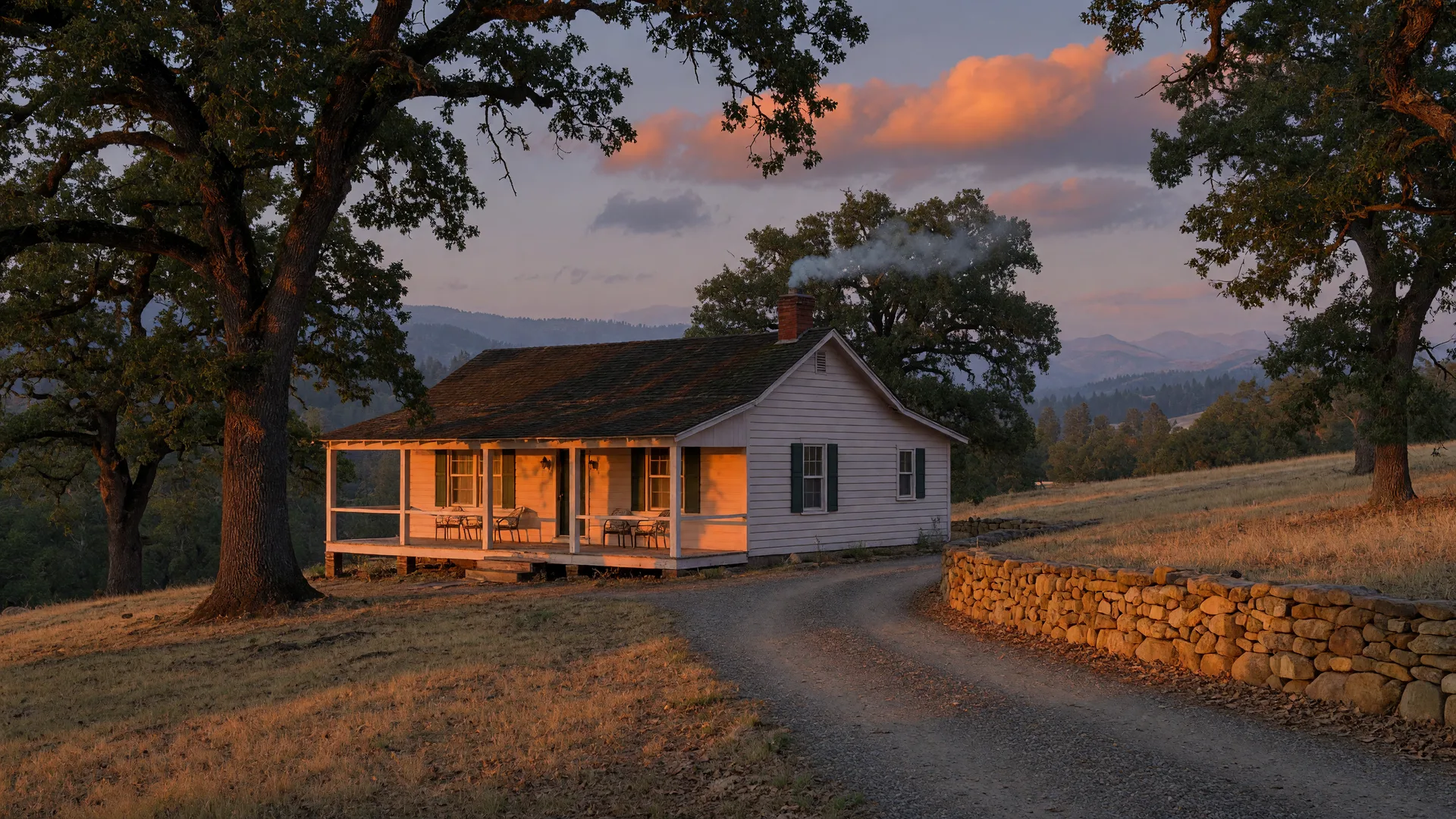
Amador County staging is not the same exercise as staging in a Valley tract development, because out here the setting sells as much as the square footage. Buyers come for the oaks, the porch, the view, and the quiet, and the staging job is to get out of the way of all of it. That means four things, in order of importance:
-
Declutter and neutralize
Buyers in the foothills are picturing their weekend life, not your decades. Pack away the collections, tone the paint, and let the views and the wood be the stars.
-
Lead with the setting
The porch, the oaks, the long driveway, the view from the back deck: those are your listing photos. A good photographer shoots the setting first and the rooms second.
-
Tackle the impression at the gate
Foothill buyers arrive slowly and judge early. The entry, the fence line, the landscaping along the drive, the front door, all of it reads before the front door even opens.
-
Light staging goes further than you expect
Fresh neutral bedding, cleared counters, and defined spots for furniture photograph better than overstuffed rooms. Full staging pays off in town and on acreage; empty corners cost you in photos.
You do not need to spend thousands on furniture. You need the home clean, calm, and photographed by someone who understands foothill light. Owners who do those three things consistently outsell the ones who skip them, with no renovation budget required.
What will the buyer's inspection find?
Every home gets inspected, and the foothill inspection report looks different from a Valley one. Buyers out here are not just checking systems, they are checking land. The categories that come up again and again in Amador:
-
Water and wells
Buyers will test the well for flow and quality, check the pump and pressure tank, and scrutinize the septic system. If yours are older, know their record before negotiating.
-
Fire safety and defensible space
County fire rules and insurance realities make clear space around the home, accessible drives, and maintained roofs a genuine value item in Amador, not a footnote.
-
Older systems and roofs
Gold Country homes age well but age: furnaces, water heaters, panels, and roofs get replaced on their own schedule, and the inspection calendar finds the ones past their prime.
-
Drainage and grading
Foothill winters want water moving away from the foundation, with working gutters and downspouts. That handful of details survives every rainy-season inspection.
-
Disclosures are your friend
California's Transfer Disclosure Statement expects the seller to say what they know, and sellers in Amador know their land. C. Ray helps you complete the paperwork honestly, because the truth always surfaces anyway and honesty keeps the deal alive.
None of this should scare a seller. It should prompt the smart move: a pre-listing inspection, done on your schedule, with your choice of inspector. You learn the report before the buyer does, you fix or disclose on your terms, and you hand the buyers a house with fewer surprises between offer and close. Smooth closings in Amador are built exactly this way.
What should I fix before listing, and what should I skip?
The rule of thumb is simple: spend where a buyer's inspector or lender will look, skip where a buyer's taste should be doing the deciding. In the foothills that sorts into four buckets:
-
Fix now
Safety items (frayed wiring, loose railings, dead smoke detectors), water intrusion and drainage issues, and obvious deferred maintenance like peeling exterior paint, worn roof spots, and broken fixtures.
-
Fix only if asked
Cosmetic aging, dated kitchens and baths, and carpet you hate. Buyers price those in already, and a repair credit at closing usually costs you less than a renovation race.
-
Skip entirely
Full remodels, new landscaping schemes, and any project that will not finish before the photos. A tidy, honest home in April beats a half-finished renovation in June.
-
Let the pre-listing inspection decide
Spend the few hundred dollars to inspect before you list. The report tells you exactly which fixes matter to an inspector, and you control the narrative instead of reacting to the buyers report.
Every dollar of prep should come back at the closing table. C. Ray walks sellers through this exact list before a single contractor is called, because the cheapest fix is the one you never needed.
Is an Associate Broker worth it for a home in Amador County?
For a foothill property, the agent's value is concrete: local pricing evidence in a market where countywide numbers lie, access to the buyer pools that actually purchase here, correct California disclosure paperwork, inspection triage that keeps deals alive, and negotiation on terms, not just price. An Associate Broker who has closed foothill transactions knows that a Sutter Creek cottage, a Jackson hillside house, and an Ione acreage sell through different playbooks.
C. Ray Brower has 11 years in real estate and 100+ homes sold across this exact corridor, from the Amador County foothills down the 99 to the Valley. His pitch is not a percentage, it is the difference between netting more and netting less: honest pricing that attracts the right buyers early, preparation that costs little and sells a lot, and communication that keeps every step on schedule. The questions in this guide are the ones he answers in his first meeting, with numbers, not opinions.
The one-page version
Price from your neighborhood's evidence, list when the home is presentation-ready, get out of the way of your setting, know your well and septic story, fix safety and water items only, and hire an Associate Broker who has actually closed foothill deals. Do those six things and Amador County will treat your sale fairly. Skip them and you learn the hard way. The encouraging news is that every one of them is something you control.
Get your Amador County market analysis
About the author
C. Ray Brower
Associate Broker, DRE #01969248, brokered by Epique Realty. 11 years in real estate, 100+ homes sold, with the Gold Country foothills and the Valley corridor as home turf. C. Ray for Your Perfect Home.