
Market timing · For sellers
Did You Know: Timing Your Home Listing Could Significantly Boost Your Profits?
By C. Ray Brower, Associate Broker · October 22, 2024
Listing timing is one of the few sale outcomes a seller can influence without spending a dollar, and the effect is real: the same home, listed a few weeks apart, can draw different amounts of attention, different offers, and different days on market. National studies of past sales cycles, including Realtor.com's long-running Best Time to Sell analysis, consistently find that homes listed in the spring, roughly mid-April through June, sell for a small but real premium and in fewer days than the same home listed in fall or winter. This guide explains what the data shows, how the Central Valley and Gold Country bend the national pattern, and when the right move is to ignore the season entirely.
What does the national data actually show?
These are the findings that repeat year after year across the major industry studies, and they are the reason the "spring market" phrase exists:
-
The best week of the year
Realtor.com's long-running Best Time to Sell analysis, built on years of national sales data, has repeatedly found that mid-April is the single best week to list: homes listed then have historically sold for roughly one percent more than the average week, about $27,000 on a typical-priced home, and about nine days faster.
-
Peak premium in late May
Zillow's analysis of a recent year of national sales found homes listed in the last two weeks of May sold for about 1.6 percent above expected value, roughly $5,600 more on a typical U.S. home than listing at an average time of year.
-
Buyer attention, less competition
The same national studies show spring listings draw noticeably more views per listing while facing noticeably fewer competing listings, a double win that shows up in both price and speed.
-
The speed picture
Listing pace follows the same curve: recent national data shows May and June homes selling in roughly 33 days on average, while winter listings take weeks longer. Days on market matter because buyers read them as a signal.
One honest caveat before the excitement: none of these studies guarantees your street. They describe the shape of the national market, and local conditions, your town, your price band, and the inventory on the block can move the needle more than the calendar. The data earns its keep as guidance, not as a promise.
Why spring moves the numbers
The seasonal premium is not an accident of weather. It is the result of a few dependable forces lining up at the same time every year:
-
Families move on the school calendar
The strongest buyer pool wants to close before summer so the kids start the new school year settled. That creates a wave of buying urgency from March through June that no other season matches.
-
The calendar of obligation
Tax refunds fund down payments, spring weather makes house hunting pleasant, and longer daylight means more showings fit into a working week.
-
Supply arrives later than demand
Inventory builds through spring too, but demand builds first. Listing before the full wave of competition arrives is the trick: early enough to meet the buyers, not so early you are alone without them.
-
Photographs better in April light
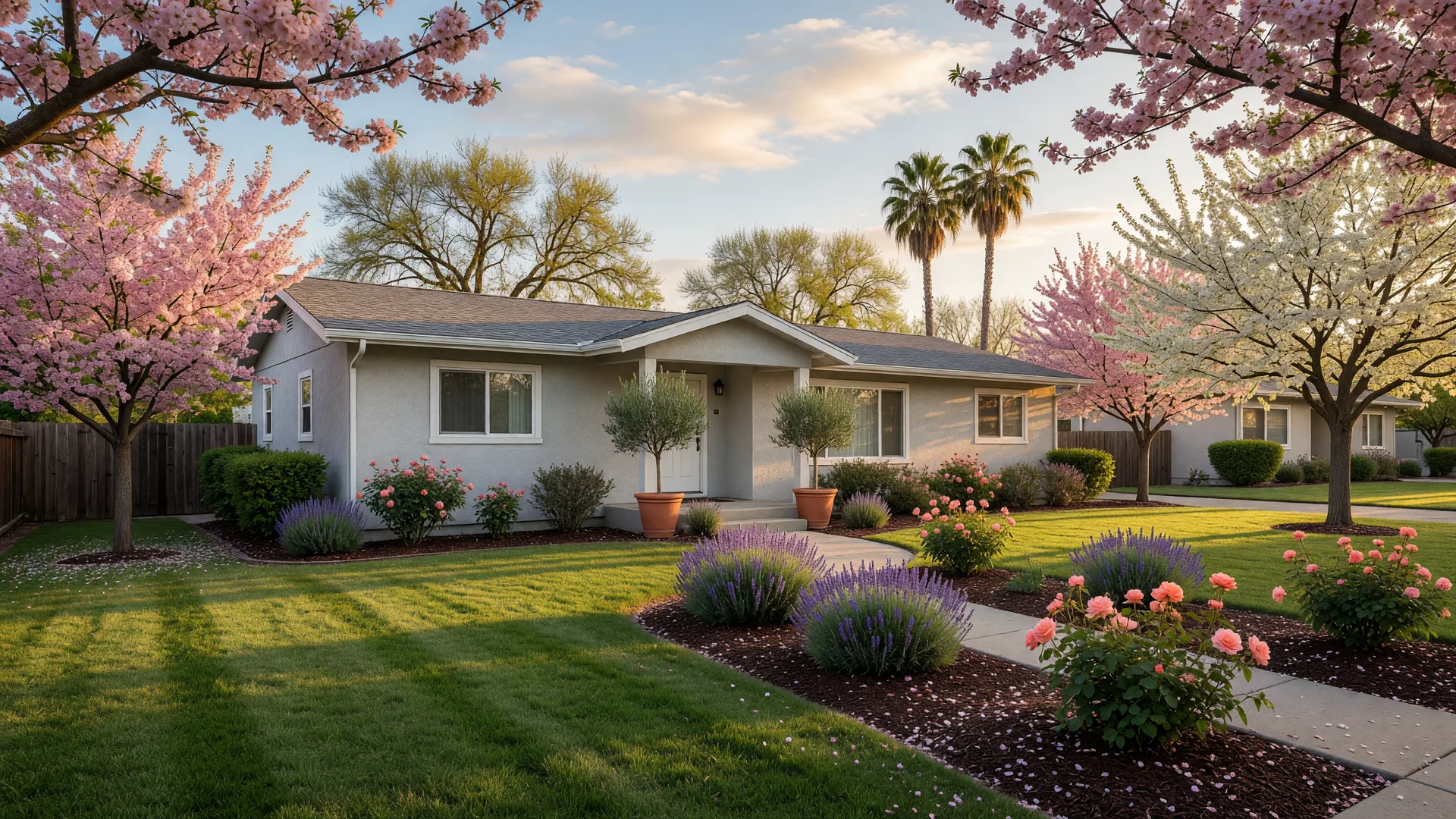
Green lawns, blooming yards, and soft clear light make a spring listing simply look better in the photos buyers rank you by.
Days on market deserve extra attention, because they are the quiet multiplier. A home that sits tells buyers and their agents something, fairly or not, and the offers that follow a 60-day listing are rarely as strong as the ones that came in the first three weeks. Listing into the demand wave is the cheapest defense against that spiral.
How the Central Valley and Gold Country bend the pattern
C. Ray serves markets with two very different buyer engines, and the timing plan should match the one your home actually answers to:
-
Valley commute markets: the school-year clock
In Lodi, Stockton, Galt, Manteca, Lathrop, and Elk Grove, the family buyer dominates, and that buyer runs on the school calendar. Spring to early summer is the heaviest pool, with a real second window after the August school bell when the fall push begins.
-
Gold Country: the weekend and second-home wave
Ione, Jackson, Sutter Creek, and Plymouth answer to a different rhythm. Spring green-up and the winery and lake seasons bring weekend buyers from the Bay Area and Sacramento, while retiree and remote-work buyers shop year round. The foothill season still peaks in spring, just with a more forgiving off-season.
-
The quiet weeks
The stretch from Thanksgiving through early January is the slowest window in both markets. Showings thin out, buyers come right after the holidays, and the lack of activity reads louder on days on market than it should.
-
Summer splits the difference
Valley heat steadies the pace after the spring rush, while the foothills stay genuinely pleasant, which keeps Ione and Jackson showings alive deep into summer.
The useful way to think about it: the Valley market runs on family timelines and the foothill market runs on lifestyle timelines, and both lean spring. The service area guides on this site give each community its own context, because a Lodi ranch and an Ione acreage genuinely sit in different markets with different calendars.
When the season should not decide for you
For all the data, the calendar is still second fiddle to your circumstances. Here is when to list regardless of the season:
-
Your life does not follow the season
A job move, a growing family, a retirement date, an estate decision: when the move is real, the calendar is the tail, not the dog.
-
Low inventory is its own season
If few homes are selling in your price band, your listing can be the only game in town in November, a genuinely strong position.
-
A specific buyer finds quickly
Foothill buyers often come with a checklist, not a season. The right buyer for a lake-adjacent Ione home or a wine-country Sutter Creek cottage can appear in any month.
-
Waiting has a cost
Every month you wait is a month of mortgage, insurance, taxes, and maintenance on a home you want to leave. A slightly softer season can still beat six more months of carrying costs.
The trap is treating timing as a reason to delay. Sellers who "wait for the market" often wait through the very season that would have served them, then list unprepared at the start of the next one. A prepared home priced to its week beats a half-prepped home chasing last spring's number every time. The preparation side of that equation is covered in the Selling Your Home guide.
The practical listing plan that uses timing
Here is how C. Ray turns all of this into a plan his clients can actually execute, whether the goal is listing in late spring or outside the season entirely:
-
Prepare in the season before the season
Use the winter months for repairs, decluttering, and staging. A March or April launch then costs nothing extra and catches the wave at its start.
-
If you miss spring, aim for the early fall window
Mid-September through October catches the late-year buyers, the post-school-settle families, and the wine-country visitors before the holiday pause.
-
Price to the week you list, not the peak you missed
A January listing priced like a May peak sits. The comps that matter are the ones from the same season and demand level you are actually facing.
-
Let an agent read the local tealeaves
National timing data points the direction; the local calendar sets the date. C. Ray watches each of his markets, from the Valley corridor to the Gold Country, listing by listing.
Timing is a lever, not a lottery. Used well, it adds a percent or two to the outcome and shaves weeks off the process. Ignored, it costs quietly. The sellers who do best are the ones who prepare early, price to the evidence of the week they are actually in, and let a local professional read the calendar for them. The full walkthrough of C. Ray's pricing and preparation process lives on the seller services page.
The honest bottom line on timing
Yes, listing season can add real money to a sale: the studies say a percent or two on price and weeks off the market, and in this part of California the spring window is the strongest for both the Valley and the foothills. And yes, the right personal timing outweighs the market's calendar. The winning move is to prepare so that you can launch the moment your life and your home are ready, with the season as a tailwind. That is a planning problem, not a waiting problem, and it is exactly the conversation C. Ray starts with every seller.
Talk timing for your home
About the author
C. Ray Brower
Associate Broker, DRE #01969248, brokered by Epique Realty. 11 years in real estate, 100+ homes sold across the Valley and the Gold Country, through spring markets and slow ones. C. Ray for Your Perfect Home.