
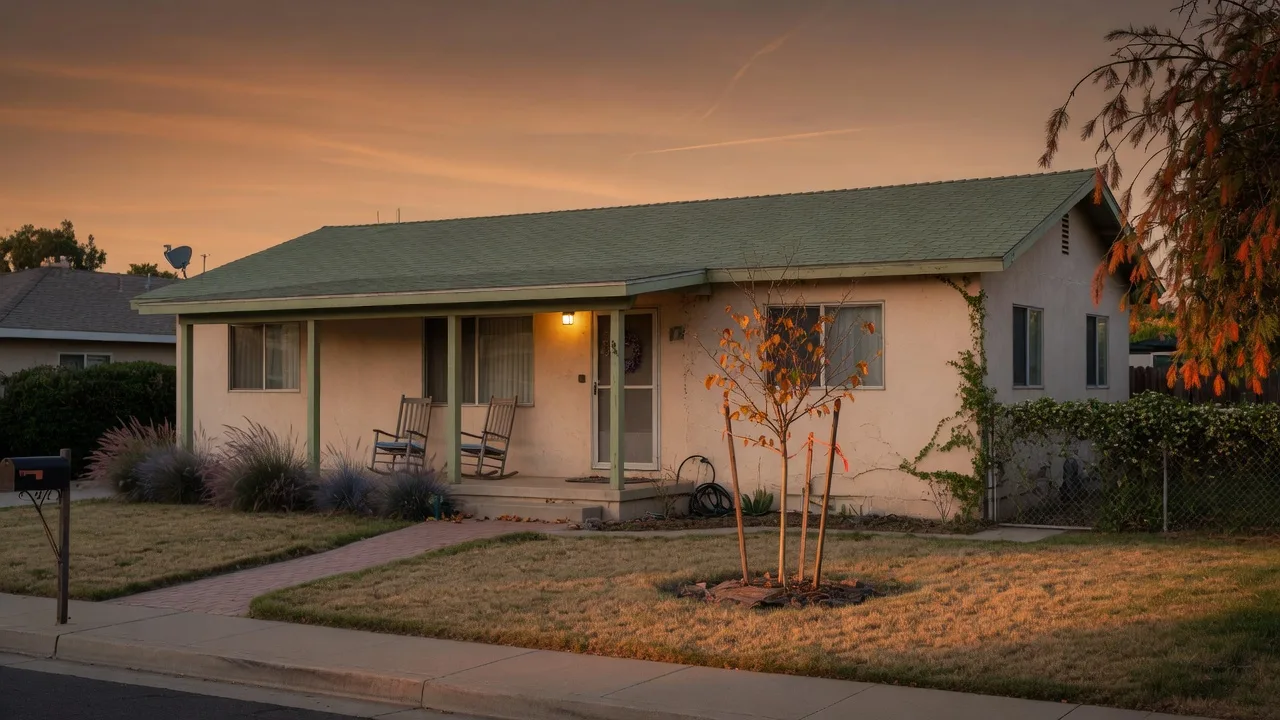
Guide for empty-nesters
Is Your Current Home Aligned with Your Retirement Goals?
By C. Ray Brower, Associate Broker · May 7, 2024
For most homeowners, the house they raised a family in is one of the largest assets they will ever own, so retirement planning is not complete until that asset is part of the conversation. The honest question is not just what your home is worth, it is whether the home still fits the life you want next: the stairs, the acreage, the upkeep, the location, and the equity all matter. C. Ray Brower, an Associate Broker with 11 years in the business and 100+ homes sold across the Central Valley and foothills, walks empty-nesters through this exact decision every year, and this guide covers how the conversation goes.
Start with the life, not the listing
Before anyone talks about equity or square footage, the useful first conversation is about the retirement you are actually planning. What does a good week look like five or ten years from now? More travel, more time with grandkids, more garden, or more nothing at all? Whose stairs are getting harder to climb? Who is going to mow the acre, repair the roof, and clear the gutters, and at what age does that stop being a pleasure?
Homes that fit retirement tend to share a few qualities: less demanding exterior maintenance, a layout that works as mobility changes, a location close to the people and services that matter, and a cost structure that does not eat the monthly budget. When clients describe the life first, the housing decision almost makes itself.
The equity reality check
Equity is the quiet power of most retirement moves, and it is worth getting right before any decision. The number on a mortgage statement tells only half the story. A realistic picture answers four questions:
-
What is the honest market value?
Not a website estimate, a comparative market analysis of recent sales in your exact neighborhood. Values differ street by street in Lodi, Stockton, Manteca, and the foothills.
-
What do you still owe?
Your remaining mortgage balance is the other half of the equity equation. Payoff numbers come straight from your lender.
-
What will you walk away with?
After payoff, closing costs, and any seller concessions, the remaining proceeds are your working number for the next step. C. Ray lays this out before you ever list.
-
What is the timeline?
Do you need the proceeds for the next home, or can you sell on your own schedule? The answer changes how and when you prepare.
The point of the exercise is not to rush a sale. It is to know the size of the tool you have. Many of C. Ray's clients discover their family home holds far more buying power than they assumed, which changes everything about what retirement looks like.
Downsizing: what you gain, what you give up
Downsizing gets treated as a loss, but the clients who do it well describe it as a trade they made on purpose. Here is the honest ledger:
What you gain
- Released equity for income, travel, or a cushion
- Lower utility, maintenance, and insurance costs
- Fewer stairs, less yard, more time
- Often a smaller, calmer footprint to manage
What you give up
- Space for guests, hobbies, and stored decades
- The garage, the shop, the garden you know
- Some privacy in attached or smaller layouts
- Memories carried by the house itself
The give-ups are real, and they are easier to accept when the gains fund the retirement they were meant for. Framing matters: this is not a smaller house, it is a different house, sized to the life that is actually coming.
Aging in place: what it really takes
Aging in place, staying in the current home, is a completely valid plan, and it deserves the same honest math as moving. The questions to answer honestly are practical: can the home be made safe and comfortable as mobility changes, can the upkeep keep happening, and does the monthly cost stay sustainable on retirement income?
For many families, "aging in place" actually means right-sizing in place: selling the acreage but staying in town, moving from the two-story to a single-level home five minutes away, or trading into a managed community while keeping the same doctors, church, and friends. That is why C. Ray's work in this market, from Stockton and Lodi to Galt, Manteca, and the foothill towns, tends to stay within a few miles of where people already live.
One more layer worth naming: California property tax rules for seniors moving within the state have been reshaped in recent years, and the details depend on age and county. C. Ray does not play tax advisor, but he flags the question and helps clients bring a tax professional into the conversation before a move, because the paperwork answers can tip the scales one way or the other.
The middle path: right-size, don't shrink
Empty-nesters do not have to choose between a four-bedroom family house and a shoebox. Across the corridor there are proven middle paths, and C. Ray shows clients real examples in every one:
-
A single-level home in the same town
Many empty-nesters in Lodi, Galt, and Elk Grove stay in the community they know, trading the family house for a single-story home with a smaller yard and the same neighbors nearby.
-
A townhome or patio home
Attached living in a managed community trades most exterior upkeep for time and freedom, often for far less than the proceeds of the family home. It is a proven fit across the Valley.
-
Foothill simplicity
Some clients decide the acreage lifestyle is exactly what retirement should be, just with less of it: a smaller Ione or Jackson home with room to garden but no barn to maintain.
-
Closer to family
The question is rarely just about the house. Moving closer to grown children or a support network is often the real goal, and the home is the vehicle.
Whatever the shape of the next chapter, the move works when the timeline is unhurried and the numbers are known. Selling and buying back-to-back does not have to be a race, and C. Ray coordinates both sides of the transaction so clients are never sleeping on a relative's couch wondering what happens next. For the full case on attached living, see the townhome guide.
How C. Ray helps empty-nesters plan the next chapter
He starts with the life, then the numbers, in that order. The first appointment is a calm conversation, no listing appointment pressure, about what retirement actually looks like and what the home needs to do. Then comes the honest market analysis, the proceeds projection, and a realistic timeline that works on your schedule, not the market's. He has helped enough clients through this exact transition to know it is equal parts financial decision and emotional one, and he paces it that way.
Start the retirement home conversation
About the author
C. Ray Brower
Associate Broker, DRE #01969248, brokered by Epique Realty. 11 years in real estate, 100+ homes sold, and a specialty in moves that mark a new chapter. C. Ray for Your Perfect Home.